
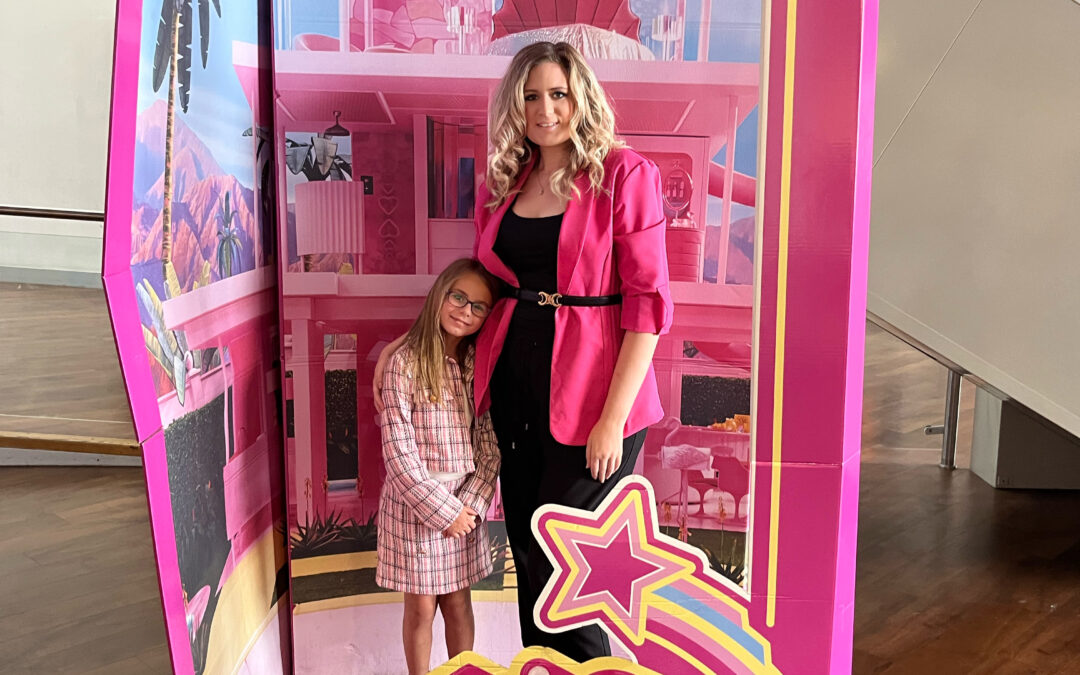
Autistic Barbie, Late Autism Diagnosis & Why Representation Isn’t One Doll
Barbie Didn’t Need to Be Autistic to Represent Me... She Already Did
When I saw the announcement of Autistic Barbie, I paused.
Not with outrage. Not with applause. But with something deeper.
A tight ache in my chest.... the kind you feel when something hits too close to home, but not quite in the way it was intended.
Because before Barbie had a diagnosis, I had shame.
Before we called it neurodivergence, I was just “mentally ill.”
And before anyone knew what autism looked like in girls, I was already drowning in it.
Growing up undiagnosed and autistic meant I lived like a secret.
I masked so hard I didn’t know where the mask ended and I began.
I forced myself to be “normal” in a world that never made sense to me and punished myself when I couldn’t keep up.
Instead of compassion, I got confusion.
Instead of support, I got strong antipsychotics.
Like many late-diagnosed women, my autism was misread as anxiety, psychosis, trauma. I was treated like a problem to be fixed, not a person trying to function.
And when I finally got the diagnosis?
Relief didn’t come.
Instead, I traded one identity for another mask. this time trying to fit into the autistic “look.”
The headphones. The stim toys. The scripted phrases. The online identity I thought I had to wear to be valid in my own diagnosis.
But it didn’t feel like me either.
Because what took me years to realise... years...is this:
I am not broken.
I am not a stereotype.
I am not “other.”
I’m just... me.
And me is completely, totally, beautifully normal.
Barbie always represented me.... even before she had a label.
Vet Barbie? That was me.
Doctor Barbie? Also me.
CEO Barbie, Astronaut Barbie, Teacher Barbie, any of them could have been autistic.
Because autism doesn’t look like one thing. It isn’t always visible. And it certainly isn’t always diagnosed.
Here’s the reality:
Autism affects around 1–2% of the UK population, yet up to 80% of autistic girls go undiagnosed or misdiagnosed by 18. And by midlife, studies suggest nearly 90% of autistic adults are still undiagnosed.
That’s not because autism is rare.
It’s because the system and society, was never taught to see us.
So when Mattel released “Autistic Barbie,” I had mixed feelings.
Yes, it’s progress. Yes, it’s well-intentioned. Yes, the nonprofit group that worked alongside Mattel to shape this release has done amazing, powerful advocacy work... so this is no shade to you. You’ve pushed forward conversations we desperately need. Your commitment matters.
But here’s what I wish had been done differently:
Instead of a single, labelled “autistic” Barbie… what if Mattel had released a sensory accessory pack?
A collection of sensory type add-ons... noise-canceling headphones, a stim toy, sunglasses, a weighted blanket... that any Barbie could use.
Not to define her. But to empower her.
To reflect the truth that neurodiversity lives in every space, in every profession, in every story.
Because when we box autism into one doll, one design, one look…
We risk reinforcing the same problem: that only certain people get to “look” autistic.
But I’m here to tell you:
Autism is not a costume. It’s not a script. And it’s not a checkbox.
It’s a spectrum of brilliance, beauty, and complexity.
What our girls and our women need is not just a doll.
We need permission.
To be who we are. Without the mask. Without the meds. Without the performative pressure.
To feel seen not because we match a diagnosis but because we finally realise we were never broken.
So here’s what I hope:
That little girls see themselves in every Barbie.
That they know they don’t need to fit a mould to belong.
That they grow up understanding what it took so many of us decades to learn:
You are already enough.
You are already valid.
And you don’t need to look autistic to be autistic.
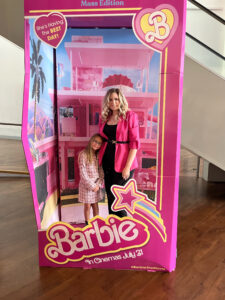
Because I was always Barbie.
And now, maybe I get to be the voice reminding the next generation:
You already belong. Just as you are.
About She’s In Business
She’s In Business Global CIC is a UK-based, government-registered business education platform redefining the entrepreneurial journey for women worldwide. With triple-accredited programs, hands-on learning, and a results-first approach, the organisation equips ambitious women to become Limitless CEOs, grounded in strategy, rooted in purpose, and scalable leadership.
Media Contact
📩 pr@shesinbusiness.co.uk
🌐 www.shesinbusiness.co.uk
📱 Instagram: @shesinbusinessofficial
Beautifully expressed Stephanie, and you definitely belong. It is amazing the hurdles you have crossed and still go on!!!
https://shorturl.fm/AaUoa
https://shorturl.fm/9XwCm